No products in the cart.
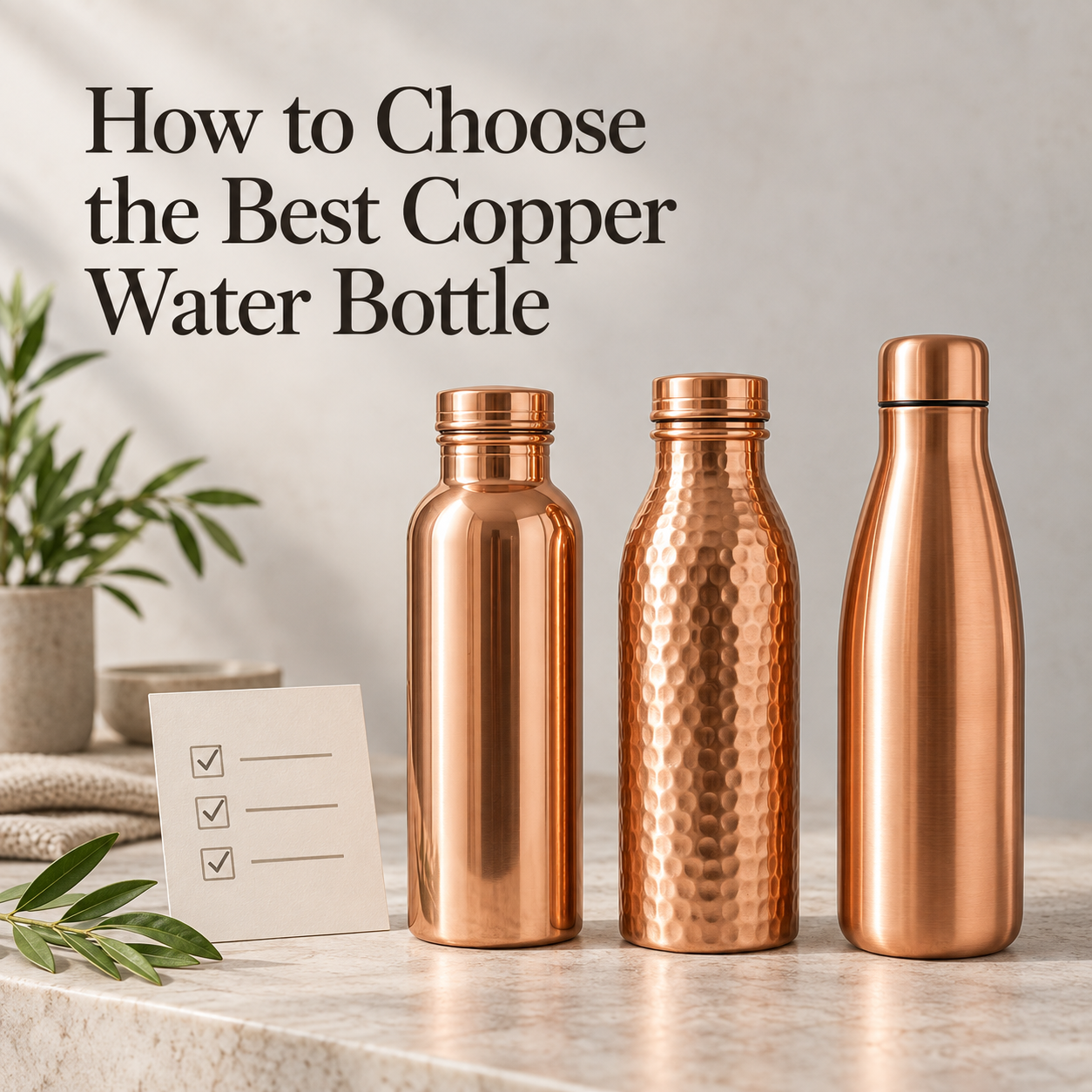

Copper water bottles have become popular for their traditional appeal, elegant appearance and reusable design. However, not every copper-coloured bottle is made from pure copper. Some products may be copper-plated, poorly constructed or coated on the inside.
Choosing the right bottle requires more than selecting an attractive design. You should evaluate its material, construction, capacity, lid, finish and the transparency of the seller.
Here are the most important factors to consider when buying the best copper water bottle.
The first and most important consideration is the material. Look for a bottle that is clearly described as being made from pure copper rather than simply having a “copper finish” or “copper colour.”
Copper-plated bottles may contain stainless steel, aluminium or another metal underneath a thin decorative copper layer. These products may look similar but are not the same as solid copper bottles.
Before purchasing, check:
Choose a seller who clearly discloses the materials used instead of making vague purity claims.
Do not judge a copper bottle only by its exterior. Check the inside carefully, as this is the surface that remains in contact with the water.
The interior of a pure copper bottle usually displays the natural warm reddish-brown colour of copper. It may not be perfectly glossy and can develop darker areas through natural oxidation.
Avoid a bottle if its interior appears painted, artificially coloured, chipped or covered with an unidentified coating. If the bottle is intentionally lined, the manufacturer should clearly state the lining material and its purpose.
Copper is not magnetic, so a magnet generally should not stick strongly to a solid copper bottle. However, the magnet test cannot prove copper purity on its own because metals such as brass, aluminium and some grades of stainless steel may also be non-magnetic.
Use the magnet test only as an initial check. It should be combined with seller documentation, product specifications, visual inspection and, where available, reliable material-testing reports.
A good copper bottle should feel reasonably strong and substantial without being unnecessarily heavy. Extremely thin copper can dent easily, while excessive weight may make the bottle inconvenient to carry.
Gently examine the bottle for:
A properly constructed bottle should sit evenly on a flat surface and feel comfortable in your hand.
A beautiful bottle will quickly become inconvenient if its lid leaks inside a handbag, office bag or backpack.
Choose a bottle with:
Before using a new bottle, fill it with water, close the lid and hold it upside down over a sink for a few seconds. This simple test can help you identify leakage before carrying it outside.
The width of the bottle’s mouth affects how easily it can be filled and cleaned.
A wider opening generally makes it easier to:
A narrow-mouth bottle may offer comfortable drinking, but it can be more difficult to clean thoroughly. Select a design that balances drinking comfort with easy maintenance.
The best capacity depends on where and how you plan to use the bottle.
Suitable for short outings, desk use and people who prefer a lightweight bottle.
A versatile option for offices, schools, daily travel and general household use.
Useful for longer journeys or people who prefer fewer refills, although the bottle will be heavier when full.
Choose a size that fits your lifestyle, storage space, vehicle holder and everyday bag.
Copper bottles are available in several finishes, including:
The finish primarily affects appearance and texture. A hammered surface may conceal small marks more effectively, while a polished surface provides a brighter shine but may show fingerprints and tarnish more easily.
Natural copper changes colour when exposed to air and moisture. This tarnishing is a normal property of the metal and does not necessarily indicate a defect.
Some copper bottles have a transparent lacquer on the outside to preserve their shine. An exterior coating can be acceptable if it is properly disclosed and remains limited to the outside surface.
The inside requires greater attention. Confirm whether the drinking-water surface is raw copper, lined or treated with another material.
Also inspect decorative bottles for:
Select a design that is attractive but also practical for regular washing and handling.
Copper requires regular care, so choose a bottle that can be cleaned without difficulty.
A practical copper bottle should have:
For everyday maintenance, rinse the bottle regularly and allow it to dry completely with the lid removed. Natural tarnish can be cleaned occasionally using lemon and fine salt, followed by thorough rinsing and drying.
Avoid steel wool, metal brushes, bleach and harsh chemical cleaners, as they may scratch or damage the bottle.
A dependable seller should provide clear and consistent information about the product.
Before ordering, review:
Be cautious of unusually low prices, incomplete descriptions and promises that sound medically unrealistic.
Copper is an essential trace mineral, but the body requires it only in small amounts. A copper bottle should not be promoted as a cure for diabetes, cancer, digestive disease, obesity or other medical conditions.
The amount of copper that transfers into water can vary according to the water’s chemistry, storage duration and bottle condition. Excessive copper exposure may cause abdominal discomfort and other health problems. The World Health Organization treats copper as both an essential nutrient and a potential drinking-water contaminant, while the NIH Office of Dietary Supplements warns that excessive intake can be harmful.
Use copper drinkware responsibly and regard it as part of a hydration routine—not a substitute for medical treatment or a balanced diet.
Before finalising your purchase, ask the seller:
Clear answers to these questions can help you make a more confident purchase.
Use a copper bottle only for clean, plain drinking water unless the manufacturer provides different instructions.
Do not store the following inside an unlined copper bottle:
Acidic liquids can react with copper and may cause excessive amounts of the metal to enter the beverage.
A reliable copper bottle should offer:
The best copper water bottle is not simply the shiniest or most decorative option. It should be made from clearly identified material, feel strong in the hand, close securely and be easy to clean.
Pay attention to the interior, construction quality, lid mechanism, capacity and seller transparency before purchasing. With responsible use and proper maintenance, a thoughtfully selected Ensure pure copper water bottle can become a beautiful and reusable part of your everyday hydration routine.

On orders over ₹ 1000 shipped within the contiguous US.

Get the help you need from our automated assistant

Your purchase price plus shipping charges on qualifying purchases.

We provide high quality products with competitive prices.

