No products in the cart.
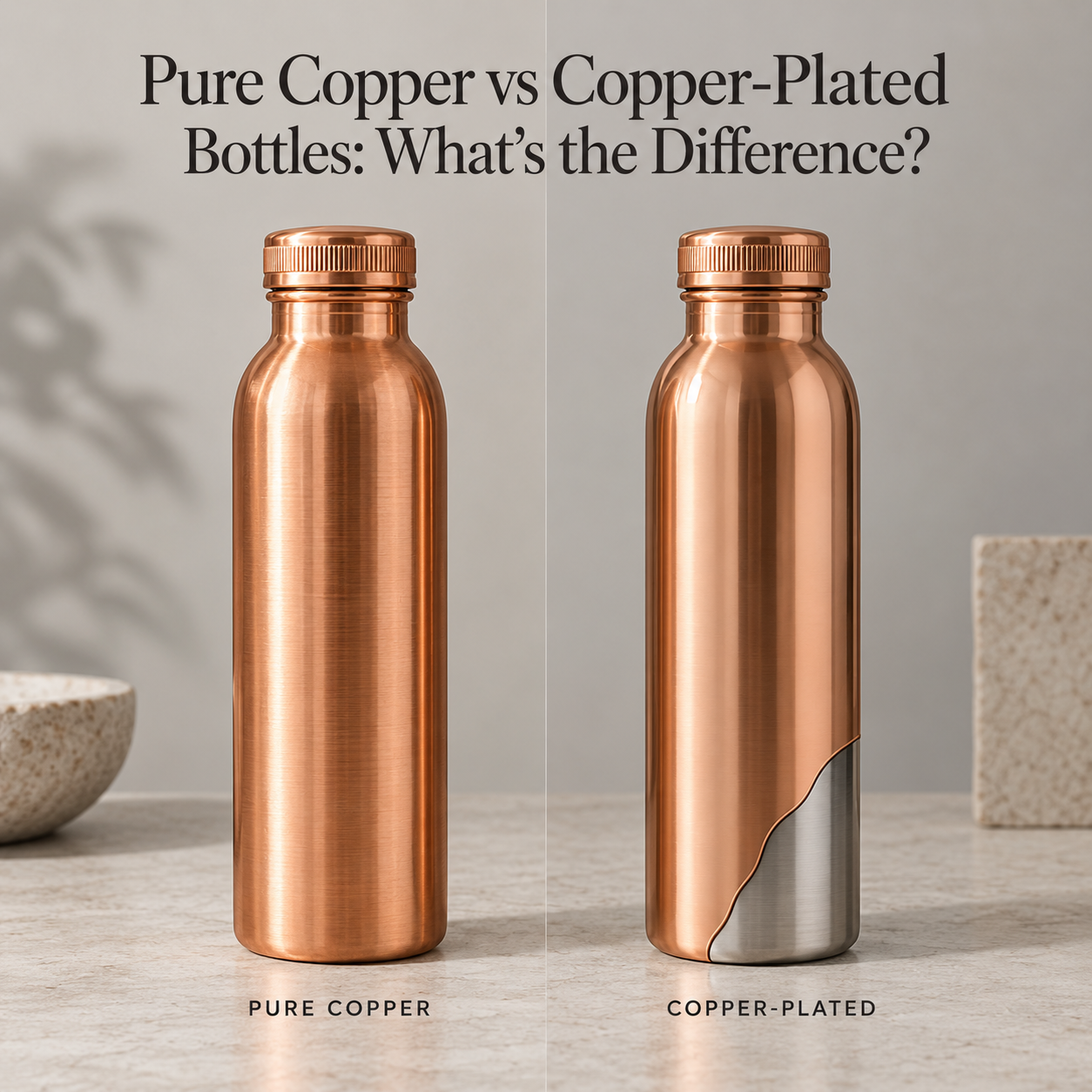

Copper-coloured water bottles may look similar at first glance, but their materials and construction can be very different. A bottle may be made from solid copper, coated with a thin layer of copper or manufactured from another metal with only a copper-coloured finish.
Understanding these differences can help you choose a bottle that matches your expectations for authenticity, appearance, durability and daily use.
In this guide, we compare pure copper and copper-plated bottles so that you can make a better-informed purchase.
A pure copper water bottle is constructed primarily from copper throughout its body. Both its exterior and its unlined interior generally show copper’s characteristic reddish-brown colour.
Some manufacturers describe their products as “pure copper” or “99.9% copper.” Such purity claims should ideally be supported by clear specifications or reliable material testing rather than appearance alone.
Pure copper bottles naturally react with air and moisture. Therefore, their surface may become darker or develop spots over time. This process is called oxidation or tarnishing and is a normal characteristic of genuine copper.
A copper-plated bottle is usually made from another base metal, such as stainless steel, and covered with a thin layer of copper.
The copper layer may be applied only to the outside for decorative purposes. In some products, the finish may simply imitate the colour of copper without containing a meaningful amount of copper at all.
Because the copper coating is thin, it can gradually wear, scratch, peel or fade depending on its quality and how the bottle is cleaned.
| Feature | Pure Copper Bottle | Copper-Plated Bottle |
|---|---|---|
| Main material | Copper throughout the bottle body | Another metal beneath a thin copper layer |
| Interior | Usually natural, unlined copper | Often stainless steel or another base material |
| Appearance over time | Naturally develops tarnish | Coating may fade, scratch or peel |
| Maintenance | Requires regular gentle cleaning | Cleaning depends on the base metal and coating |
| Durability | Long-lasting but may dent | Base may be strong, but plating can wear away |
| Price | Usually more expensive | Generally more affordable |
| Traditional copper-water use | Suitable when designed for drinking water | Usually decorative unless specifically stated |
| Material identification | Copper visible inside and outside | Copper may appear only on the outside |
| Repair or polishing | Tarnish can generally be polished | Excessive polishing can remove the plating |
| Buying consideration | Purity and construction | Base material and coating quality |
The biggest difference is what lies beneath the surface.
A pure copper bottle is made from copper through the thickness of its body. If its surface becomes scratched, the exposed material should still appear copper-coloured.
A plated bottle contains a different base metal covered with a thin copper coating. A deep scratch may reveal silver, grey or another colour beneath the surface.
However, intentionally scratching a new product is not recommended. Instead, review the product specifications and inspect areas where the material is naturally visible, such as the bottle mouth, interior or thread.
The interior is particularly important because it remains in direct contact with drinking water.
In a traditional unlined pure copper bottle, the inside normally displays the natural colour and texture of copper. In a copper-plated bottle, the interior may be stainless steel or another material even though the exterior looks like copper.
Neither construction is automatically unsuitable if it is accurately disclosed and designed for drinking water. The important point is that buyers should know what material is actually touching the water.
Avoid products with chipped paint, flaking coatings or an unidentified lining inside.
Pure copper naturally changes colour over time. Exposure to oxygen, moisture, skin oils and minerals in water can make the surface look darker or less shiny.
This natural tarnish can usually be removed using a gentle copper-cleaning method, such as lemon and fine salt, followed by thorough rinsing and drying.
Copper-plated bottles may not develop exactly the same kind of uniform patina. Instead, their thin coating may:
Tarnish on solid copper can often be polished, but worn plating cannot be restored through ordinary cleaning.
A well-made pure copper bottle can last for years when handled and cleaned correctly. Copper is durable, but it is softer than stainless steel and may dent if dropped on a hard surface.
Copper-plated bottles may have a stronger underlying metal. However, the decorative copper layer can wear down over time, especially if scrubbed with steel wool or strong abrasive cleaners.
Therefore, durability depends on both the bottle’s construction and the way it is maintained.
Pure copper bottles generally have a distinctive weight and metallic feel, but weight alone cannot confirm purity. The thickness of the bottle and the material used underneath a plated finish can make two different products feel similar.
When examining a bottle, check whether it feels:
These features are important regardless of whether the bottle is pure copper or copper-plated.
Pure copper bottles generally cost more because copper is more expensive than many common base metals. The manufacturing process, metal thickness, handmade finish, lid construction and decorative workmanship can also affect the price.
Copper-plated bottles are usually more affordable because only a small quantity of copper may be used.
An extremely low-priced product advertised as “100% pure copper” should be examined carefully. Price alone does not prove authenticity, but a major price difference can be a reason to check the material information more closely.
Pure copper requires gentle and regular care. Its natural tarnish can be cleaned using suitable household methods, but steel wool and harsh chemicals should be avoided.
Copper-plated products require even more caution because aggressive polishing may remove the thin copper layer.
Plain drinking water is the safest choice for an unlined copper bottle.
Avoid storing acidic or reactive drinks inside it, including:
Acidic liquids can react with unlined copper and increase the amount of copper entering the beverage. The World Health Organization recognises copper as both an essential nutrient and a potential drinking-water contaminant, depending on the level of exposure.
For copper-plated bottles, permitted beverages depend on the material used on the interior. Always follow the manufacturer’s instructions.
Copper is an essential mineral, but the body needs it only in small quantities. A pure copper bottle should not be treated as a medical product or a cure for health conditions.
The amount of copper released into water can vary according to factors such as:
Excessive copper exposure can cause nausea, stomach pain and other health problems, according to the NIH Office of Dietary Supplements.
Anyone with Wilson’s disease or a diagnosed copper-metabolism, liver or kidney condition should consult a qualified doctor before regularly consuming copper-stored water.
No single home test can guarantee copper purity, but several checks can help you assess the product.
Look for specific material information rather than phrases such as “copper look,” “copper finish” or “copper colour.”
A solid copper bottle usually displays copper colour both inside and outside unless the product has an intentionally disclosed lining.
If a bottle’s existing scratches reveal a silver or grey metal underneath, it is likely plated. Do not intentionally damage the product to perform this test.
Copper is non-magnetic, so a strong magnetic attraction may suggest another metal. However, brass, aluminium and some stainless-steel grades can also be non-magnetic. Therefore, the magnet test does not prove purity.
Request material specifications, testing information or a purity report from the seller when available.
Choose a brand that clearly provides its business identity, product composition, capacity, care instructions and return policy.
Choose a pure copper bottle if you want:
Choose a copper-plated bottle if you want:
Neither option should be misrepresented. The best choice depends on the bottle’s intended use and whether the seller clearly explains its materials.
Before buying, ask:
The primary difference between pure copper and copper-plated bottles lies beneath their appearance. A pure copper bottle is constructed from copper throughout its body, while a copper-plated bottle uses a thin copper layer over another material.
For customers seeking a traditional copper vessel, a well-made Ensure pure copper water bottle offers authenticity, natural beauty and lasting value. Whichever bottle you choose, confirm its material, inspect its interior and follow the manufacturer’s usage and cleaning instructions.

On orders over ₹ 1000 shipped within the contiguous US.

Get the help you need from our automated assistant

Your purchase price plus shipping charges on qualifying purchases.

We provide high quality products with competitive prices.

