No products in the cart.
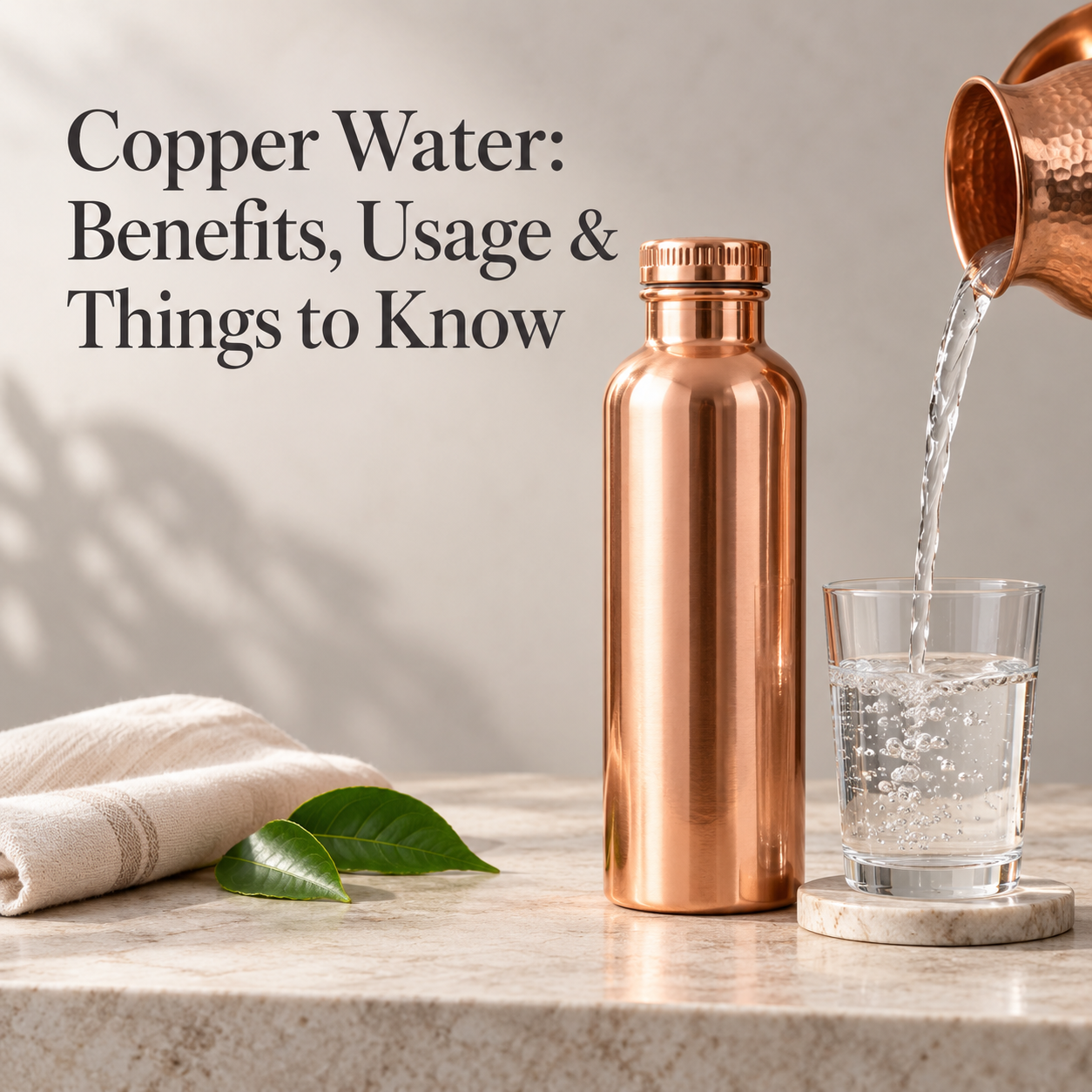
Copper water has been part of traditional Indian wellness practices for generations. In Ayurveda, water stored in a copper vessel is commonly called Tamra Jal. The practice involves keeping clean drinking water in a pure copper container for several hours before consuming it.
Although copper is an essential mineral, copper water is often surrounded by exaggerated health claims. Understanding what it is, how to prepare it and how to consume it responsibly can help you incorporate the tradition into your routine safely.
Copper water is plain drinking water that has been stored in an unlined pure copper bottle, jug or vessel for a limited period.
During storage, a small amount of copper may naturally transfer from the vessel into the water. The amount can vary depending on:
Copper water is not the same as a copper supplement because its copper concentration is not standardised or easily measured at home.
Yes. Copper is an essential trace mineral, meaning the body needs it in small amounts to perform normal biological functions.
According to the NIH Office of Dietary Supplements, copper is involved in:
However, most people obtain copper through a balanced diet containing foods such as nuts, seeds, whole grains, legumes, seafood and certain vegetables.
The fact that copper is essential does not mean that consuming more copper will produce additional health benefits.
The clearest benefit comes from the water itself. Keeping a dedicated bottle nearby can encourage you to drink water regularly throughout the day.
Proper hydration supports normal body-temperature regulation, digestion, circulation and physical performance. A reusable copper bottle can make hydration more convenient at home, at work or while travelling.
Water stored in an unlined copper vessel may contain a limited amount of dissolved copper. This can contribute to overall copper intake, but the exact amount is difficult to predict without laboratory testing.
Copper water should therefore not be used to diagnose or treat copper deficiency. Anyone concerned about a nutritional deficiency should consult a qualified healthcare professional.
Laboratory research suggests that storing water in copper vessels for several hours may reduce certain bacteria. In one study, water deliberately contaminated with several diarrhoea-causing bacteria was stored in copper vessels for 16 hours, after which researchers could not recover those bacteria in culture. Read the published study.
However, this does not make a copper bottle a certified water purifier. Copper storage cannot be relied upon to remove every microorganism, chemical contaminant, heavy metal or other impurity.
Always fill your copper bottle with water that is already considered safe to drink.
A well-made copper bottle can be used repeatedly for years when maintained properly. Using a reusable bottle may help reduce dependence on single-use plastic water bottles.
Copper is also durable and recyclable, making it an appealing material for customers interested in more sustainable everyday products.
For many people, preparing copper water is more than a hydration habit—it is a way to remain connected with Indian traditions.
A copper bottle brings this traditional practice into a convenient modern format suitable for desks, dining tables and travel.
Copper water is frequently promoted for weight loss, improved digestion, better skin, stronger immunity, thyroid balance and protection against numerous diseases.
Copper itself contributes to several normal functions in the body. However, there is insufficient reliable human evidence showing that water stored in a copper bottle can independently cure diseases, accelerate weight loss, reverse ageing or provide dramatic improvements in health.
Copper water should be considered part of a hydration routine—not a medicine, detox product or replacement for a balanced diet and prescribed treatment.
Preparing copper water is simple, but the vessel should be made from properly identified, unlined copper and intended for drinking-water use.
Before the first use, wash the bottle with warm water and mild soap. Rinse it thoroughly and allow it to dry.
If the bottle is tarnished, gently clean it using fresh lemon and fine salt. Rinse immediately so no lemon or salt remains.
Fill the bottle with plain water that is already safe to drink. Do not use copper storage as a method for making contaminated water potable.
Keep the water inside the closed copper bottle for several hours or overnight. It is unnecessary to leave water in the vessel for multiple days.
Begin with a small amount and observe how your body responds. Copper water does not need to replace all the water you drink throughout the day.
Do not continuously top up old water. Empty the bottle, rinse it regularly and let it dry completely with the lid removed.
Use an unlined copper bottle only for plain drinking water.
Avoid storing:
Acidic liquids can react with copper and may cause a larger amount of copper to enter the drink. Lemon and vinegar can be used briefly for cleaning, but they must be rinsed away thoroughly and should not be stored for consumption.
There is no universally established amount of copper water that everyone needs to consume.
The copper concentration varies from one bottle and water source to another. Therefore, copper water should be used moderately rather than consumed excessively throughout the day.
If the water develops a noticeably bitter or strong metallic taste, stop drinking it, empty the bottle and clean it properly. A strong metallic taste may indicate that more copper has entered the water than intended.
It is generally better to store water in a copper bottle at room temperature unless the manufacturer says the bottle is suitable for refrigeration.
Very cold water is not required for copper storage. Avoid freezing the bottle, as expanding ice can deform or damage it.
If you prefer chilled water, transfer the prepared water into another suitable container after the recommended storage period.
Copper water is usually prepared by storing plain water for a few hours or overnight. Avoid leaving the same water inside for several days.
Regularly emptying, rinsing and drying the bottle helps prevent odour, residue and excessive stagnation.
For routine cleaning:
To remove tarnish, briefly rub the exterior with lemon and fine salt, rinse thoroughly and dry with a soft cloth.
Avoid bleach, steel wool, metal brushes and harsh abrasive cleaners. Pure copper naturally changes colour, so mild tarnish does not mean the bottle is dirty or defective.
Copper water may not be suitable for everyone. Consult a healthcare professional before consuming it regularly if you:
Excessive copper intake can cause abdominal pain, nausea, vomiting and diarrhoea, and prolonged high exposure may damage the liver. The World Health Organization considers copper in its drinking-water safety guidance because it is essential at low levels but potentially harmful at excessive concentrations.
Extra care should also be taken before introducing copper water to infants or young children. Ask a paediatrician for individual guidance instead of assuming that an adult routine is appropriate for a child.
Some products are only copper-plated or painted. Confirm what material is present inside the bottle.
Lemon juice is acidic and should not be stored inside an unlined copper bottle.
Prepare fresh water regularly and clean the vessel between uses.
Copper is required only in small amounts. Excessive exposure does not provide additional health benefits.
Copper water cannot replace prescribed medicines, medical testing, safe drinking-water treatment or a balanced diet.
Stop drinking the water if it tastes unusually bitter or metallic. Clean and inspect the bottle before using it again.
Copper water combines an ancient Indian tradition with a modern reusable hydration habit. Copper is an essential nutrient and possesses interesting antimicrobial properties, but copper water should be consumed responsibly and without unrealistic expectations.
Choose a high-quality Ensure pure copper water bottle, use only safe plain drinking water, store it for a limited period and clean the bottle regularly. Most importantly, remember that moderation and correct usage are essential.

On orders over ₹ 1000 shipped within the contiguous US.

Get the help you need from our automated assistant

Your purchase price plus shipping charges on qualifying purchases.

We provide high quality products with competitive prices.

