No products in the cart.
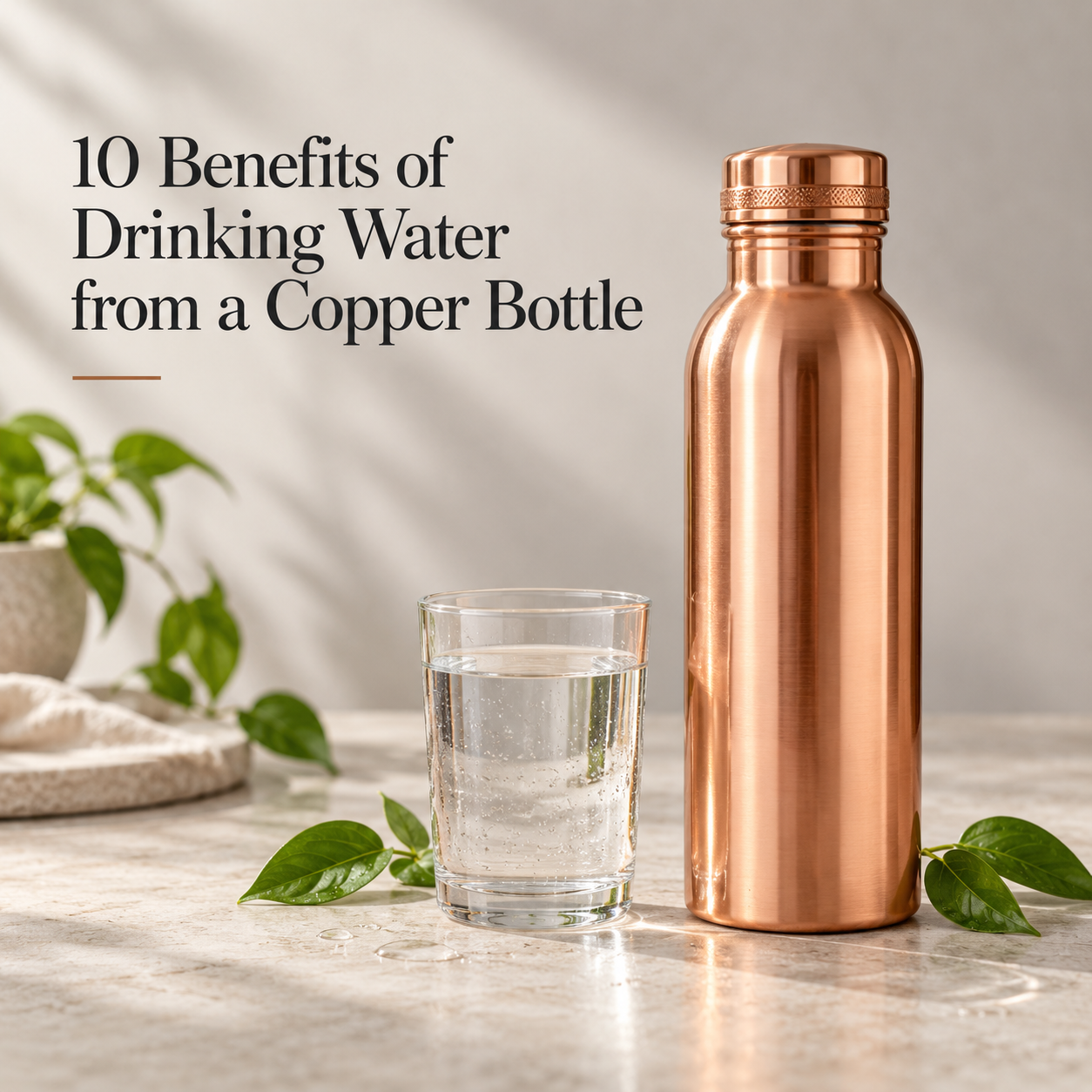

Copper bottles have been used in Indian households for generations. In Ayurveda, storing water in a copper vessel is traditionally known as Tamra Jal. Today, copper bottles are also appreciated for their durability, reusable design and timeless appearance.
Copper is an essential trace mineral that supports several important processes in the body. However, drinking water from a copper bottle should complement a balanced diet—not replace medical treatment or be considered a cure for disease.
Here are ten potential benefits of making a pure copper bottle part of your daily routine.
Keeping a dedicated water bottle close by makes it easier to drink water throughout the day. Proper hydration supports normal digestion, circulation, temperature regulation and overall physical performance.
A beautifully crafted copper bottle may also encourage you to carry water more consistently, helping you build a healthier hydration routine.
When water is stored in a copper bottle, a very small amount of copper may naturally transfer into it. Copper is an essential nutrient required by the human body, although most people obtain sufficient amounts through foods such as nuts, seeds, whole grains and seafood.
The amount transferred into water can vary depending on the water’s acidity, storage duration and the condition of the bottle. Copper water should therefore not be treated as a measured copper supplement.
Copper plays a role in enzymes involved in producing energy inside the body’s cells. Maintaining an adequate copper intake through a balanced diet helps the body perform these normal metabolic processes.
Using a copper bottle does not create instant energy, but it can support a hydration habit while connecting you with a material associated with this essential nutrient.
The body requires copper for the proper functioning of the immune system. Copper deficiency can affect immune health, although deficiency is uncommon among otherwise healthy people eating a varied diet.
Drinking copper-stored water should not be considered a treatment for infections or a replacement for nutritious food, prescribed medicine or professional medical advice.
Copper assists enzymes involved in maintaining connective tissues, including components that support the skin, blood vessels and bones.
These benefits relate to maintaining an adequate overall copper intake—not specifically to drinking water from a copper bottle. A balanced diet remains the safest and most reliable source of essential nutrients.
Copper supports normal iron metabolism and helps the body form red blood cells. Insufficient copper can interfere with the way the body transports and uses iron.
However, copper water should not be used to treat anaemia. Anyone experiencing persistent fatigue, weakness or suspected iron deficiency should consult a qualified healthcare professional.
Copper contributes to the normal functioning of the nervous system and is involved in processes related to neurotransmitters and the protective covering around nerve cells.
The body needs copper only in small amounts. More copper is not necessarily better, which is why moderation is important when using copper drinkware.
Copper is a component of certain antioxidant enzymes that help protect cells from oxidative damage. This makes adequate dietary copper important for the body’s natural defence mechanisms.
It is important to distinguish between the role of copper as a nutrient and claims that copper-infused water can “detox” the body. There is not enough reliable evidence to treat copper water as a detoxification remedy.
Copper surfaces are known to possess antimicrobial properties under certain conditions. This may help reduce the survival of some microorganisms on the bottle’s copper surface.
Nevertheless, a copper bottle is not a water purifier. Always fill it with clean, safe drinking water and wash the bottle regularly. Do not rely on copper to make contaminated water safe.
A good-quality copper bottle can be reused for years when properly maintained. Choosing reusable drinkware can reduce dependence on disposable plastic water bottles and support a more environmentally conscious lifestyle.
Copper bottles are also durable, distinctive and naturally elegant, making them suitable for use at home, at work or while travelling.
To enjoy your copper bottle responsibly:
Excessive copper exposure can cause nausea, stomach discomfort and other health problems. People with Wilson’s disease, liver or kidney conditions, and those taking copper-containing supplements should consult a doctor before regularly drinking copper-stored water. Copper is essential in small amounts but can be harmful in excess, according to the NIH Office of Dietary Supplements and the World Health Organization.
Drinking water from a copper bottle can be a meaningful way to combine traditional Indian practice with modern sustainable living. Its most dependable advantages are encouraging hydration, reducing disposable-plastic use and providing a durable drinking vessel.
Use a high-quality pure copper bottle correctly, keep it clean and enjoy it in moderation as part of a healthy, balanced lifestyle.

On orders over ₹ 1000 shipped within the contiguous US.

Get the help you need from our automated assistant

Your purchase price plus shipping charges on qualifying purchases.

We provide high quality products with competitive prices.

